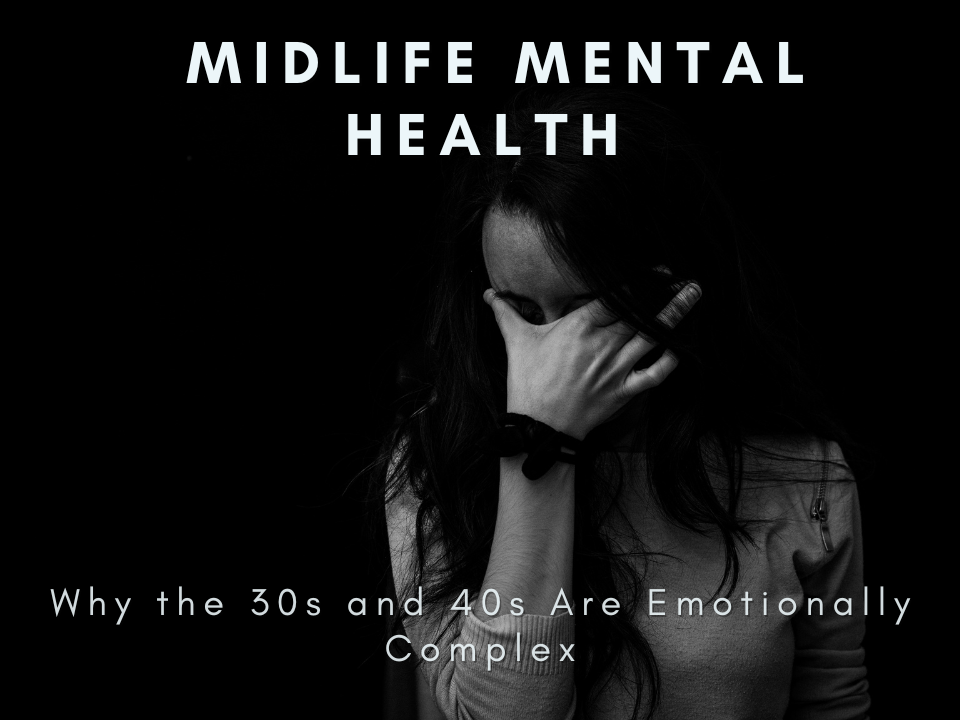
Midlife Mental Health – Why the 30s and 40s Are Emotionally Complex

Introduction

You’re no longer young. But you’re not old either.

You have responsibilities, expectations, maybe a family. But also questions, regrets, and a longing for something more.

Welcome to midlife — where emotional complexity peaks.

Why Mental Health Shifts in Your 30s and 40s

  • Loss of spontaneity and increased routine
  • Shifting identity from dreamer to provider
  • Unprocessed childhood or early adult trauma
  • Hormonal changes, especially in women

Signs of Midlife Mental Strain

  • Emotional blunting
  • Unexplained irritability
  • Sleep/focus issues despite success
  • Questioning life’s meaning

How Psychiatry Supports Midlife Transition

A psychiatrist offers safe exploration, medical insight, and emotional validation during this identity evolution. With the right support, midlife becomes a time of clarity — not crisis.

At Mindvise, we guide adults through the emotional crossroads of midlife with clarity, care, and compassion.