
Introduction
We all experience stress — deadlines, decisions, relationships, uncertainty. It’s a part of modern life.
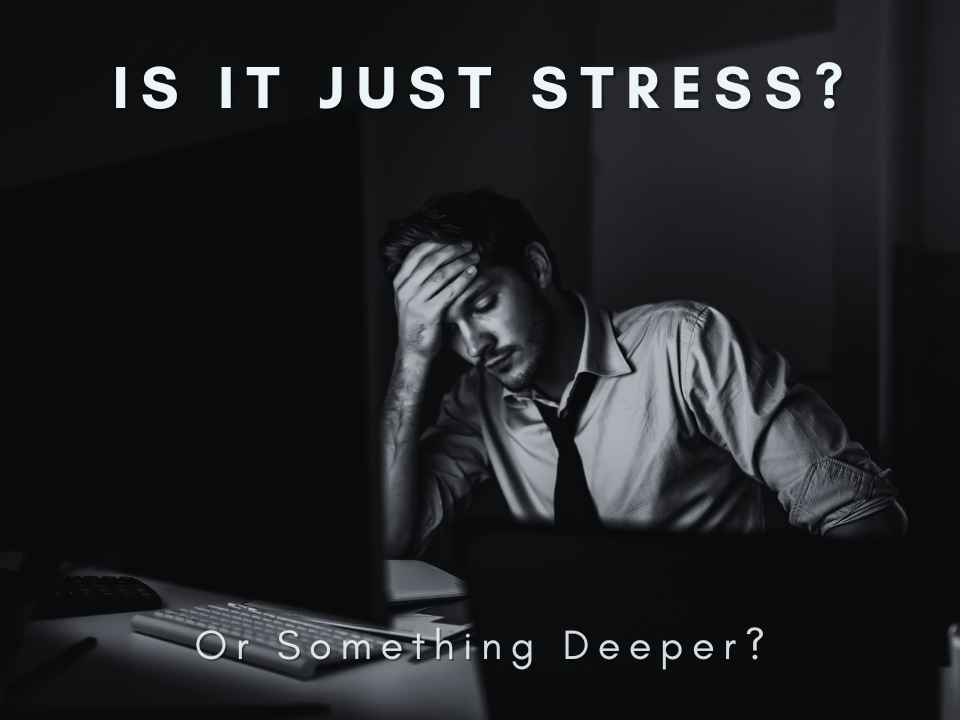
But sometimes, what we call “stress” is actually something deeper. Something that isn’t resolved with a walk, a Netflix break, or a weekend getaway.
So, how do you know when it’s just stress… and when it’s a mental health condition needing clinical care?
Stress vs. Mental Health Concern — The Key Differences
Criteria | Everyday Stress | Clinical Concern (e.g. anxiety, depression) |
Duration | Temporary, situation-based | Persistent (weeks/months) |
Sleep & Appetite | Briefly affected | Chronically disturbed |
Mood Fluctuation | Returns to baseline after rest | Consistently low or anxious |
Functioning | Still manageable | Starts affecting work, relationships, energy |
Coping Ability | Improves with self-care | Doesn’t improve, or worsens over time |
When Stress Turns Into Something More
- Chronic tension headaches
- Irritability without cause
- Constant fatigue despite rest
- Crying spells or emotional numbness
- Loss of interest in once-loved activities
- Avoiding social situations or work tasks
If these patterns persist, it’s not “just stress.” It’s time for a deeper check-in.
What a Psychiatrist Can Help You With:
- Distinguishing stress from anxiety or depression
- Identifying burnout vs clinical mood disorders
- Addressing neurochemical imbalances causing persistent emotional symptoms
- Providing structured treatment options — not just advice
If your “stress” no longer feels temporary, let’s talk. At Mindvise, we look beyond the surface to help you feel whole again